Biotechnology | Deep UV Raman | Proof-of-Concept for the Detection of Biomarkers of Neurodegenerative Diseases
The lack of reliable blood-based biomarkers makes the early diagnosis of dementia difficult
The early detection of dementia poses a growing challenge for the healthcare system, as existing diagnostic methods can be time-consuming, expensive, or invasive, and reliable blood-based biomarkers are still lacking. Deep-UV Raman spectroscopy offers a promising, label-free approach for the sensitive analysis of blood samples, as it reduces fluorescence interference and can detect subtle biochemical changes. To test this approach, IS-Instruments, a UK-based manufacturer of spectroscopic instruments, conducted proof-of-concept experiments with the goal of establishing a reliable technique for the early screening of biomarkers in serum samples.
Blood serum is a complex, heterogeneous matrix whose composition can change during measurement. Static measurement setups make reliable blood serum analysis difficult and can lead to variable and unrepresentative results. Multiple measurements at different positions further increase the measurement effort and analysis time. Conventional Raman spectroscopy is also limited by the fluorescence of biological samples and, due to the high laser power density, carries the risk of localized heating and photochemical changes.
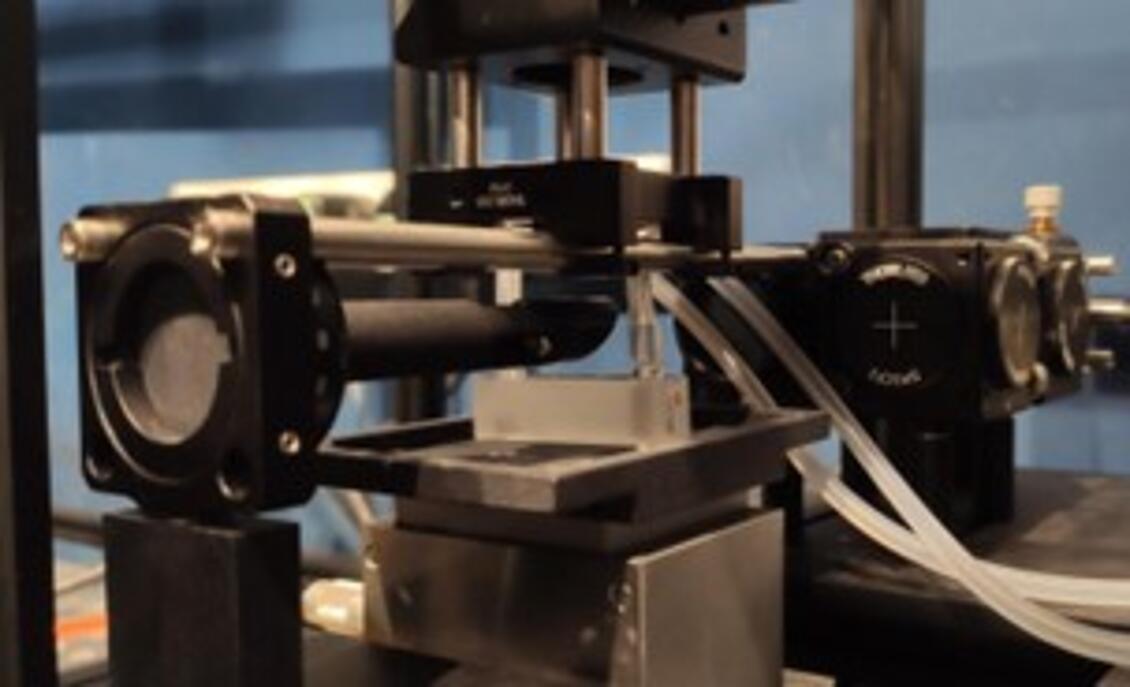
Measurement setup with a Hellma flow cell and an IS-Instruments UV-Raman spectrometer
IS-Instruments is using deep-UV Raman spectroscopy to investigate the identification of low-concentration biomarkers in blood serum samples. The prototype, developed in collaboration with Hellma using a quartz flow-through cuvette, is intended to be further developed into an analytical system for the early, rapid, and less invasive screening of neurodegenerative diseases.
Let our experts advise you now » Contact